Field sales
Coaching field sales reps you never hear on a call
How to coach reps who sell face to face: record the meeting on the phone, score it against your scorecard and comment on the moments that matter.
5 min read
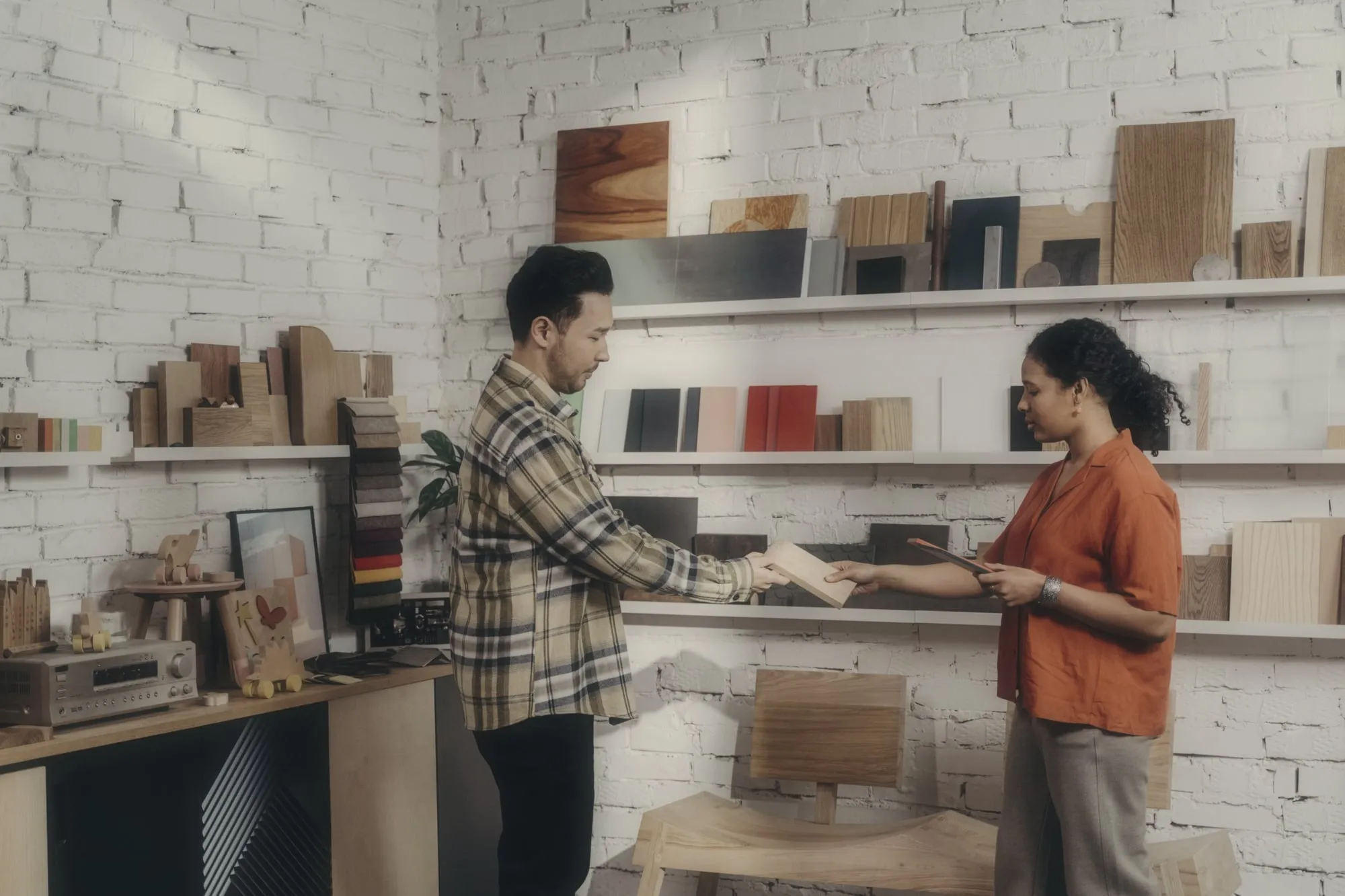
You coach field reps you never hear by recording the meetings where they actually sell. A phone on the table captures the showroom consultation or the site visit, Drummer scores it against your team’s scorecard, and you leave comments on the exact moments that matter. Coaching moves from the quarterly ride-along to every week.
Why is field sales so hard to coach?
Field sales is hard to coach because the manager is not in the room. An inside-sales manager can listen to any call. A field sales manager gets the CRM note, the rep’s recap and the result, and has to guess what happened in between.
The usual tools do not close that gap:
- Ride-alongs are rare, cost the manager a full day, and change the meeting. A rep with the boss beside them sells differently.
- The rep’s own recap is memory, filtered through what went well. The objection that killed the deal rarely makes the notes.
- Win rates and pipeline numbers show that something is wrong, not what. They arrive weeks after the meeting that caused them.
So coaching in field teams tends to happen on outcomes (“why did we lose this one?”) instead of behaviour (“you presented the price before you knew the budget”). The fix is to hear the meeting. More on the practice in our glossary entry on sales coaching.
How does the phone app capture an in-person meeting?
The rep opens the app, taps record, puts the phone on the table and locks the screen. The phone app for iOS and Android is built for the places field sales happens: showrooms, site visits, a customer’s kitchen table.
- It records with the screen locked, and shows that it is recording on the lock screen.
- It pauses for a phone call and resumes when the call ends, so an interruption does not end the recording.
- It works offline and uploads later, when the rep is back in signal.
- It transcribes in the language of the meeting, Dutch, French, German or 60 more, with the rep and the customer as separate speakers.
The customer should know before the recording starts. Most teams make it part of the welcome: “I record our conversation so I don’t miss anything in your design, is that alright?” See our article on recording sales calls under GDPR and the glossary entry on call recording consent.
What does a coached kitchen showroom consultation look like?
A coached consultation looks like this: the meeting is recorded, scored against the showroom’s own scorecard, and the designer gets feedback on two or three specific moments within a day.
Take a designer in a kitchen showroom with a couple planning a new kitchen. They walk the displays, compare worktop samples and sit down at the design table. In the meeting the couple sets a budget range, picks an induction hob and a built-in combi oven, asks whether the dishwasher can be quiet enough for an open-plan living room, and says they move into the house in March.
Drummer scores the meeting against the showroom’s scorecard:
| Scorecard criterion | What the designer did | Evidence |
|---|---|---|
| Budget confirmed | Asked for a range before showing worktops | 06:12 |
| Cooking habits explored | Asked who cooks and how often, then let the couple talk | 09:40 |
| Appliances mapped | Listed hob, oven and dishwasher, missed the extractor question | 24:55 |
| Timing and decision | Confirmed the March move-in, did not ask who else decides | 38:20 |
| Next step agreed | Booked a second appointment with the 3D design | 51:03 |
Each score comes with the reasoning and the timestamp. The manager clicks 38:20, hears the couple mention “my father-in-law is paying part of it”, and leaves a comment on that moment: next time, ask whether he wants to see the design before they sign.
The same afternoon, the designer’s AI twin drafts the follow-up email in the couple’s language with the design summary: layout, worktop choice, appliances, the budget range and the date of the next appointment. The designer reads it, adjusts one line and sends it from their own mailbox before leaving the showroom.
How do you coach from the scorecard and the comments?
You coach from the moments the scorecard flags, not from the whole recording. Nobody has time to listen to every 50-minute meeting, and nobody needs to.
The manager opens the rep overview, sees which criteria are drifting across the week, and opens the calls where they scored lowest. Each criterion jumps to its moment. A comment pinned to that timestamp starts a thread: the rep replies, asks a question, adds context the recording missed. When the point is understood, the thread is resolved. The coaching page shows the full flow.
Scorecards follow your own playbook. A showroom team might use a five-step consultation scorecard; a team selling machinery to dealers might use the discovery call template or MEDDIC.
Which conversation metrics matter in a face-to-face meeting?
All six conversation metrics apply to in-person meetings, and two say the most about field sales: longest monologue and longest customer story.
- Talk ratio: who did the talking.
- Longest monologue: the longest stretch the rep spoke without a break. In a showroom, that is often a product lecture on drawer runners.
- Longest customer story: the longest stretch the customer spoke. Long stories mean the rep asked something worth answering.
- Patience: how long the rep waits before speaking after the customer stops.
- Interactivity: how often the conversation switches between speakers.
- Question rate: how many questions the rep asks.
Each metric is banded per call type as On track, Worth a look or Focus area, so a consultation is not judged against a cold call. See talk-to-listen ratio for how the bands work.
How do you roll it out without spooking the team?
Roll it out as coaching, not surveillance, and start with reps who want it. Members see only their own calls; managers see their team’s. Agree up front what the recordings are for, and keep retention short.
Most field reps come round when they see what they get back: a follow-up email written before they reach the car, a CRM record they no longer fill in, and feedback on their actual meetings instead of their numbers. Read how it fits a field team on the field sales page.
Questions readers ask
Does the phone app record without mobile signal?
Yes. The app records offline and keeps the audio on the phone until there is a connection again, then uploads it in the background. A consultation in a showroom basement or a visit to a building site with no signal is captured in full, and the transcript, scores and follow-up draft appear once the upload is done.
Do customers have to agree to being recorded in a showroom?
They have to know, and in practice you ask. Under GDPR you need a legal basis and must tell the people you record why and for how long. Most teams ask at the start of the meeting and do not record when someone declines. Our article on recording sales calls under GDPR covers the details.
Are in-person meetings scored on the same scorecard as video calls?
Yes. A meeting recorded with the phone app is transcribed, split by speaker and scored against the same scorecard as a Teams or Zoom call. Each criterion gets a score, the reasoning and the timestamp that proves it, so a manager can compare a showroom consultation with a video demo on the same terms.
Read next
- May I record a sales call under the GDPR?Yes, with a lawful basis, a notice to everyone before recording starts, a retention period and a processor agreement. What that means in practice.
- MEDDIC in practice: what to listen for on a real callThe six MEDDIC letters as they sound on a real call: what a rep asks, what a buyer says, and a scored discovery call with timestamps.
- Sales coachingSales coaching is the ongoing work of a manager helping individual reps improve specific skills and behaviours, based on what actually happened in their calls and deals rather than on results alone.
Give every rep a day back, starting next week.
Thirty minutes, on your own calls and your own CRM. No migration, nothing for your reps to learn.